Jelqing Before and After Pictures Real: What You Should Know
Jelqing before and after pictures real or not is a common question men ask online. These photos promise to show real results from jelqing exercises. Jelqing is a hand technique some men use to try to increase penis size. Many share pictures online claiming big changes. But can these pictures be trusted? Here’s how it works and what you need to understand about these images.
 What Is Jelqing?
Jelqing is a manual exercise where a man uses his hand to stretch and massage the penis. The goal is to increase length and girth over time. Men usually do it when the penis is semi-erect. The idea is that repeated stretching improves blood flow and tissue growth.
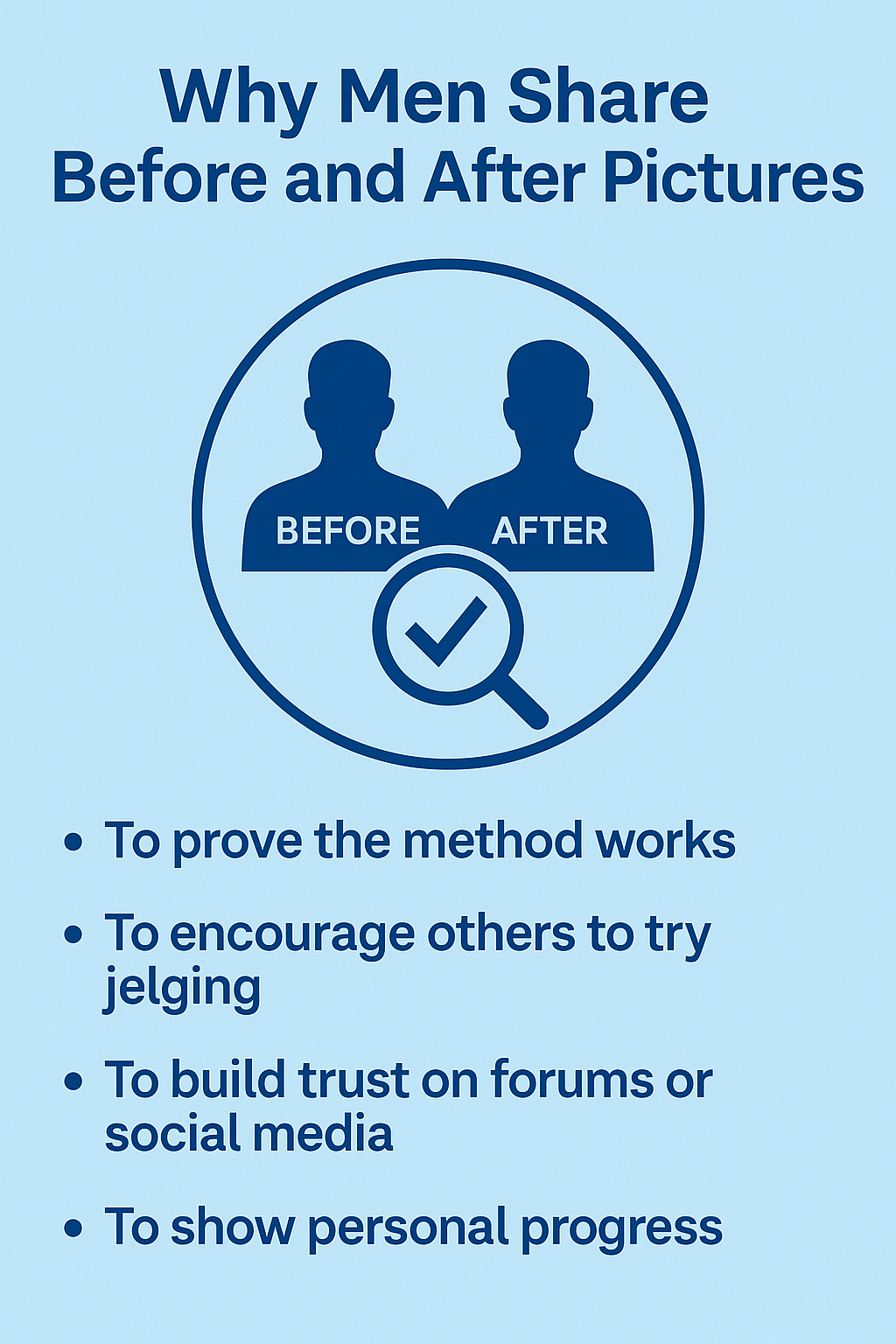
Pictures give a visual way to track changes. Many believe photos are the best proof of success.
The Appeal of Visual Proof
Before and after pictures seem clear. They show what words cannot. Photos catch attention and create hope. Men looking for size gains want to see real examples. But photos can be tricky. Lighting, angles, and time gaps can change how things look.
Many men feel reassured seeing someone else’s progress. These pictures often fuel more interest in jelqing. But relying on them alone can be misleading.
What People Are Saying Online About Jelqing

👉 Read the full online discussion page here
Common Claims About Jelqing Results
Increased length by 1–2 inches
Noticeable girth gains
Improved erection quality
More confidence during sex
These claims come with pictures that look convincing. But real science behind jelqing is missing. Most medical experts warn that jelqing can cause harm if done wrong.
The Risks of Trusting Pictures Alone
Photos can be edited or staged. Some may exaggerate results with filters or tricks. Others may take pictures at different times of day or with different lighting. Changes in erection hardness also affect size in pictures.
Without verified proof, pictures are not reliable evidence. Men should be careful before believing all before and after images.
How to Tell If Jelqing Before and After Pictures Are Real
Many men search for jelqing before and after pictures real enough to trust. But not all images online show true results. Some pictures are edited or taken in ways that exaggerate changes. Knowing how to spot real versus fake photos helps you avoid false hope. Here’s what to look for.
Signs of Real Jelqing Before and After Pictures
Consistent lighting and background in both photos
Same angle and distance from the camera
Clear time gap noted between pictures (weeks or months)
Similar erection levels in before and after shots
Natural skin texture and no obvious editing marks
Photos that follow these points are more likely to be genuine.
Common Tricks That Fake Photos Use
Changing lighting to hide shadows or emphasize size
Different camera angles to make the penis look longer or thicker
Using filters or Photoshop to smooth skin or add size
Stretching or pressing the penis differently in each photo
Taking pictures with varying erection firmness
These tricks create the illusion of growth where there may be none.
Why Time Frame and Consistency Matter
Jelqing results, if any, take time. Quick changes in pictures are usually suspicious. Real before and after shots should show progress over weeks or months. Also, the penis should look similar in shape and position in both images. Changes that look too dramatic or instant are likely not real.
Realistic Expectations Based on Biology
The penis is made of soft tissue and blood vessels. While stretching might help a little, big size gains are unlikely. Jelqing cannot add muscle like lifting weights. Growth is slow if it happens at all. Understanding this helps you judge if photos match what’s actually possible.
Testimonials vs. Pictures
Words from real users can help more than photos. Many men share how jelqing affected them honestly. Sometimes, the truth lies in stories more than images. Look for detailed testimonials with dates and measurements, not just pictures.
What Science Says About Jelqing and Penis Enlargement

Many jelqing before and after pictures real or not, the truth is that medical research on jelqing itself is very limited. No major clinical studies prove it works or is safe. However, there is more research on other penis enlargement methods, especially traction devices, which can offer some insight into non-surgical techniques.
Studies on Traction Devices and Their Effects
Traction devices stretch the penis over time using mechanical force. Several studies have tested their effectiveness and safety:
1. Length Gains With Long-Term Use
A 2011 study found that using traction devices for at least 9 hours a day over 3 months increased penis length by up to an inch. This shows that slow, consistent stretching can have some effect.
Read the study
2. Traction Devices Compared to Surgery
Another 2011 study showed traction devices produced results similar to surgery in some cases. Researchers suggested using these devices as a first treatment option before surgery.
Read the study
3. Effectiveness Limited to Deformities
A 2013 study found traction devices helpful for treating penis deformities like Peyronie’s disease but not for increasing penis length or thickness in healthy men.
Read the study
4. No Significant Enlargement Found in a Later Study
A 2016 study found no significant changes in penis size with traction device use, noting more research is needed to confirm any benefits.
Read the study
Jelqing Risks and Medical Opinions
Medical experts warn that jelqing may cause injuries like bruising, nerve damage, or erectile dysfunction if done improperly. Without solid research backing its safety or effectiveness, doctors recommend caution. Many believe jelqing’s risks outweigh any possible benefits.
Why Research Matters More Than Pictures
Jelqing before and after pictures real or fake can mislead. Medical research gives a clearer picture of what is possible and what is not. Understanding the science helps men make safer choices rather than relying only on photos that might not be real.
Making Smart Choices About Jelqing and Common Questions Answered
Jelqing before and after pictures real or not, it’s important to think carefully before trying this exercise. Knowing the facts can help you avoid harm and decide what’s best for your body.
Should You Trust Jelqing Before and After Pictures?
Pictures can be helpful but aren’t proof. Many photos online may be edited or staged. Real progress takes time and is often small. Don’t expect dramatic changes just from photos. Always be cautious.
How to Approach Jelqing Safely
If you choose to try jelqing, follow these tips:
Use plenty of lubricant to avoid skin damage
Don’t apply too much pressure—gentle stretching is safer
Avoid jelqing when fully erect to reduce injury risk
Limit sessions to a few times a week, not daily
Stop immediately if you feel pain or numbness
Safer Alternatives to Jelqing
There are other ways to improve sexual health and confidence:
Medical-grade penis pumps
Clinically tested penile extenders
Pelvic floor exercises (Kegels)
Counseling for size concerns and anxiety
FAQ About Jelqing Before and After Pictures
Q: Are jelqing before and after pictures real?
A: Some are real, but many are edited or misleading. Use caution when judging photos.
Q: How long does it take to see results?
A: If results happen, they usually take weeks or months. Quick changes are unlikely.
Q: Can jelqing cause permanent damage?
A: Yes, if done too hard or often, jelqing can cause bruising, nerve damage, or erectile problems.
Q: What’s safer than jelqing for penis enlargement?
A: Penis pumps and extenders with clinical backing are safer. Talk to a doctor before trying anything.
Q: Where can I find reliable info and support?
A: Look for trusted medical websites, urologists, and expert-reviewed articles.