How to Do Jelqing Exercises Correctly: Technique, Safety, and Results

How to Do Jelqing Exercises Correctly: Why Form Matters

man thinking How to Do Jelqing Exercises Correctly

Jelqing is a penis exercise that uses a repeated hand motion to push blood through the shaft. The goal is to improve blood flow and possibly create small, gradual changes in size over time. If you want results without injury, it’s important to learn how to do jelqing exercises correctly from the start. Bad form can cause pain, bruising, or even long-term damage.

When done with proper technique, jelqing is less risky and more effective. Understanding the basics before you begin is the first step.

What Jelqing Is

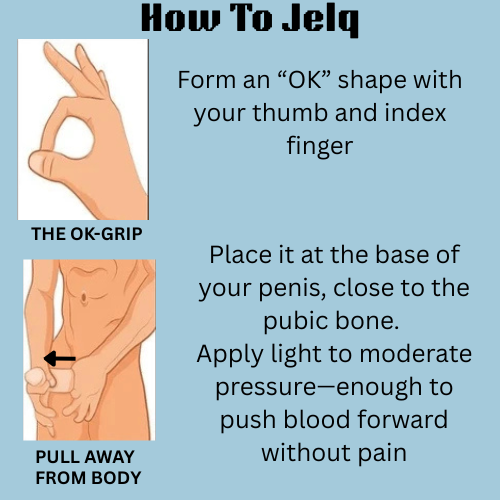
Jelqing involves gripping the base of the penis with your thumb and index finger in an “OK” shape and slowly moving toward the tip. This motion pushes blood forward and stretches tissue slightly. The exercise is usually done with partial erections, not full ones, to reduce strain.

The practice is often promoted online for enlargement, but real results vary. Some men report better erection quality or a fuller look after consistent use.

Most injuries happen when too much pressure is used or when jelqing is done too often. Correct form lowers these risks and helps you focus on gradual progress.

What People Are Saying Online About Jelqing

👉 Read the full online discussion page here

How Jelqing Works in Theory

The idea behind jelqing is to cause a controlled stretch of penile tissue. When the tissue is exposed to mild, repeated pressure, it may adapt over time. This is similar to how traction devices work, though jelqing uses manual force instead of a mechanical pull.

Some short-term effects include temporary swelling, a warmer feel, and a heavier hang when flaccid. These changes usually fade within hours. Any permanent change, if it happens, would require months of consistent training.

Common Myths About Jelqing

  • It works fast – Real changes, if any, take months, not days.

  • More pressure means faster results – Excess force can cause injury, not gains.

  • Anyone can do it safely without learning – Proper instruction matters to avoid harm.
infographic of How to Do Jelqing Exercises Correctly

Key Takeaways Before You Start

If you plan to try jelqing, focus on:

  1. Learning the correct grip and motion.

  2. Using lubrication to prevent skin damage.

  3. Working with a partial erection, not full.

  4. Avoiding pain or excessive pressure.

  5. Giving your body rest days to recover.

How to Do Jelqing Exercises Correctly: Step-by-Step Technique

man preparing for jelqing

Once you understand the basics, the next step is learning exactly how to do jelqing exercises correctly. Proper preparation, grip, and motion will reduce injury risk and help you stay consistent over time.

Preparing for Jelqing

Before starting, make sure your penis is warm and relaxed. This helps blood flow and makes the tissue more flexible. You can:

  • Wrap a warm towel around the area for 3–5 minutes

  • Stand under warm water in the shower

  • Use a heating pad on low for a short time

Always use lubrication. Choose a water-based or oil-based lube that stays slick during the session. Dry jelqing increases friction and can damage the skin.

infographic on How to Do Jelqing Exercises Correctly

Your penis should be around 50–70% erect. Too soft and the motion won’t be effective; too hard and the risk of injury goes up.

The Motion

  • Slowly move your grip from the base toward the tip

  • Take about 2–3 seconds for each stroke

  • Release at the glans (head) and repeat with the other hand

Alternate hands so you maintain steady pressure and avoid fatigue. Beginners can start with 50–75 strokes, adding more over time as the body adapts.

Safety Tips While Jelqing

  • If you feel sharp pain, stop immediately

  • Avoid squeezing hard or forcing blood into the glans too quickly

  • Do not jelq if you have open sores, swelling, or recent injury

  • Take at least one rest day between sessions at first

Common Mistakes to Avoid

  1. Going too fast – Quick strokes reduce effectiveness and increase risk.

  2. Overtraining – Doing long sessions daily can cause tissue damage.

  3. Skipping the warm-up – Cold tissue is more likely to bruise.

  4. Using no lube – Friction can tear skin and irritate nerve endings.

How to Do Jelqing Exercises Correctly: What Research Suggests

researchers talking about jelqing

There are no large clinical trials that test jelqing itself, but research on similar techniques—like traction therapy—can give clues about what to expect. These studies help explain why proper form and consistency matter when trying to see results.

Why Research Is Limited

Jelqing is often discussed in online forums, but it hasn’t been widely studied in medical research. This is partly because it’s a self-taught, self-applied method that can vary a lot between individuals. Most scientific information comes from studies on penis traction devices or tissue stretching methods.

Relevant Studies and Findings

1. Gains with Consistent Stretching

A 2011 study found that men using traction devices for at least 9 hours per day over 3 months gained up to 1 inch in length. This suggests that steady, controlled tension over time can lead to measurable changes.

2. Comparable to Surgery in Some Cases

A 2011 study reported that traction devices produced results similar to certain surgical methods. Researchers recommended trying traction first because it was less invasive.

3. Effective for Curvature, Not Always for Size

A 2013 study found that traction devices worked well for Peyronie’s disease (penile curvature) but were less effective for increasing size in men without curvature.

How This Relates to Jelqing

While jelqing uses hands instead of a device, the principle is similar—applying controlled pressure to stretch tissue over time. The difference is that jelqing sessions are much shorter, which may mean results take longer or are less pronounced.

Key Takeaways from the Research

  • Gains, if they happen, are usually small and gradual

  • Consistency is more important than intensity

  • Safety matters—overdoing it can cause more harm than good

  • Not everyone will see the same results

Research suggests that if jelqing is done, it should be treated as a long-term, low-pressure practice, not a quick fix.

How to Do Jelqing Exercises Correctly: Tracking Progress and Staying Safe 

man tracking jelqing progress on calendar

Doing jelqing the right way is only half the process. To know whether it’s working for you, you need to track changes carefully and protect your sexual health along the way.

Tracking Progress

Keeping records helps you notice both improvements and warning signs. Use:

  • Measurements – Record erect and flaccid length and girth once a month

  • Photos – Take pictures in consistent lighting and angles for comparison

  • Notes – Log erection quality, stamina, and any discomfort after sessions

Avoid checking daily. Changes happen slowly, and frequent measuring can lead to frustration.

Signs You Should Stop or Take a Break

Stop jelqing and rest if you notice:

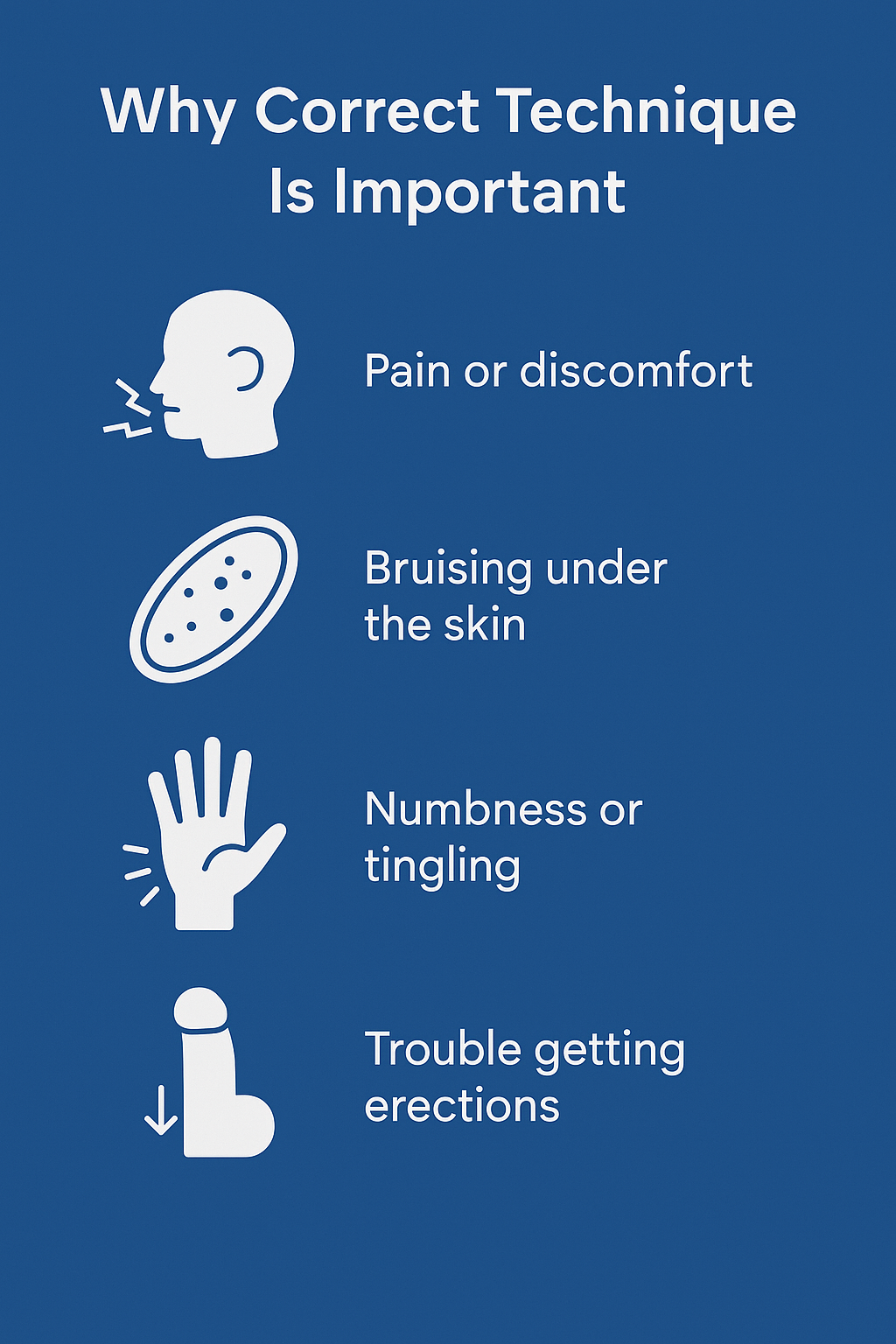
  • Persistent pain or swelling

  • Numbness or tingling

  • Difficulty getting or keeping erections

  • Visible bruising or lumps under the skin

If symptoms don’t improve after rest, see a healthcare provider.

Long-Term Safety Habits

  • Warm up before every session

  • Use enough lubrication to prevent skin irritation

  • Keep pressure light to moderate

  • Take regular rest days to allow recovery

  • Listen to your body—discomfort is a warning, not a sign of progress

FAQ

Q: How often should I jelq for the best results?
A: Beginners often start 2–3 times per week, then adjust based on comfort and recovery.

Q: Can jelqing cause permanent damage?
A: Yes, if done too hard, too often, or without proper form. Injuries can affect erectile function.

Q: How long before I see results?
A: Temporary swelling may happen immediately, but any lasting change usually takes months.

Q: Should I combine jelqing with other methods?
A: Some men use traction devices or pumps alongside jelqing, but this should be done with caution and rest days to avoid overtraining.

Q: Is jelqing medically proven to work?
A: No. Most evidence is anecdotal. The closest research is on traction devices, which show modest gains over months of daily use.